Down Jacket Oz to Grams: How to Convert Fill Weight for Winter Warmth
2026-10-03 · 4 min read
Understanding the Difference Between Fill Power and Fill Weight
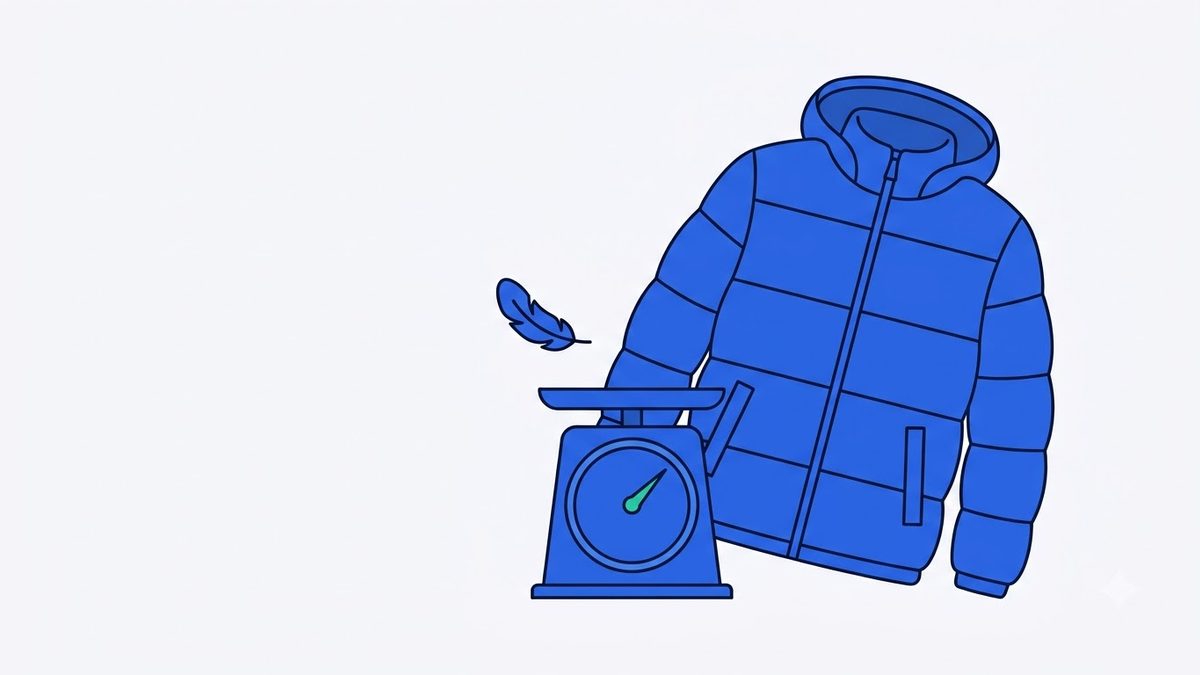
As late autumn arrives and major seasonal sales like Black Friday approach, shoppers around the world begin researching down jackets and winter parkas on international retail websites. Product specification sheets for premium outerwear frequently highlight figures such as "800 Fill Power" alongside "8.5 oz Down Fill" in the technical details section. While both metrics describe the down insulation packed inside the garment, they measure two completely different physical properties that determine how the jacket performs in freezing weather.
Fill power (FP) measures the loft or volumetric expansion of down clusters—specifically, how many cubic inches one single ounce of down occupies under laboratory testing conditions. Higher fill power indicates larger down plumes capable of trapping more insulating air pockets per unit of mass, delivering superior thermal efficiency without unnecessary bulk. However, fill power alone does not dictate how warm a jacket will feel on a sub-zero winter day; actual thermal output is heavily governed by the total amount of down insulation stuffed inside the shell, known as the fill weight.
Clothing retailers in metric-standard regions typically publish fill weight in grams (g), whereas North American outdoor apparel brands express this measurement in imperial ounces (oz). Because these two measurement systems differ, converting overseas ounce figures into grams is an essential first step before comparing a prospective purchase against the winter coats already hanging in your wardrobe.
How to Convert Ounces to Grams and Gauge Real-World Warmth
In standard imperial measurements, one avoirdupois ounce (oz) equals approximately 28.35 grams (g). When reading an outdoor jacket spec sheet, you can calculate the approximate metric weight of the insulation by multiplying the listed ounce value by 28.35. Performing this basic conversion allows you to classify any down jacket into established thermal performance tiers and understand its intended environmental conditions.
For example, ultralight packable down jackets and inner layering pieces generally carry a fill weight between 2.5 and 3.5 oz, which translates to roughly 70 to 100 grams of down. These lightweight garments are designed for active pursuits, brisk autumn mornings, or pairing underneath a waterproof hardshell rather than standing still in deep winter frost. Midweight down jackets intended for transitional seasons and moderate early winter climates typically contain between 4.5 and 6.0 oz (approximately 127 to 170 grams) of down fill, providing balanced warmth for daily commuting.
Heavyweight winter parkas and expedition jackets designed for standalone wear in severe sub-freezing temperatures require a fill weight of 10.0 to 12.0 oz (approximately 283 to 340 grams) or higher to maintain body heat effectively. When comparing multiple outerwear models across different global retailers, entering the listed ounce values into Unit Converter under the weight category generates an instant conversion table showing grams, kilograms, and pounds side by side, preventing manual calculation mistakes.
Tool for this postUnit ConverterPyeong↔m², inch↔cm, lb↔kg, temperature, data sizesNo upload · Free · No installOpen →Do Not Confuse Total Garment Weight with Down Fill Weight
A frequent misunderstanding when evaluating outdoor gear specifications online is confusing the total garment weight (often labeled simply as "Item Weight" or "Product Weight") with the pure down fill weight. This distinction is critical because the overall weight of a jacket includes far more than just its insulating down clusters.
If a product page states "Weight: 18 oz" without further clarification, that number almost always represents the total finished weight of the entire piece, encompassing heavy exterior nylon face fabrics, interior lining textiles, metal zippers, storm flaps, drawcords, and hood hardware. A winter jacket with a total weight of 18 oz (about 510 grams) might actually contain only 3 to 4 oz (roughly 85 to 113 grams) of down insulation inside its baffles, functioning merely as a lightweight sweater jacket rather than a cold-weather shield.
To avoid costly purchasing errors, look specifically for technical entries labeled "Fill Weight," "Down Weight," or "Insulation Fill" on the manufacturer's spec table. Before placing an international order, use Unit Converter to quickly convert fractional ounce values down to exact decimal grams on your phone or desktop browser, and compare those numbers directly against the care tags of garments you already trust in cold weather.
Essential Checklist Before Buying Down Outerwear Online
Purchasing winter coats from international online storefronts often involves expensive return shipping fees, cross-border customs procedures, and lengthy turnaround times if an item fails to deliver adequate warmth. Relying solely on impressive fill power ratings such as 850 or 900 without verifying the physical quantity of down inside can lead to unexpected disappointment during the first severe cold snap.
Establishing a habit of checking the exact down fill weight and converting it from imperial ounces to grams ensures that your expectations align with real-world thermal performance. Once you locate the insulation specifications on a product page, run the values through Unit Converter to verify the metric fill weight, cross-reference your regional climate requirements, and finalize your purchase with complete confidence.
Try it in your browser nowUnit ConverterPyeong↔m², inch↔cm, lb↔kg, temperature, data sizesNo upload · Free · No installOpen →